Concise answer
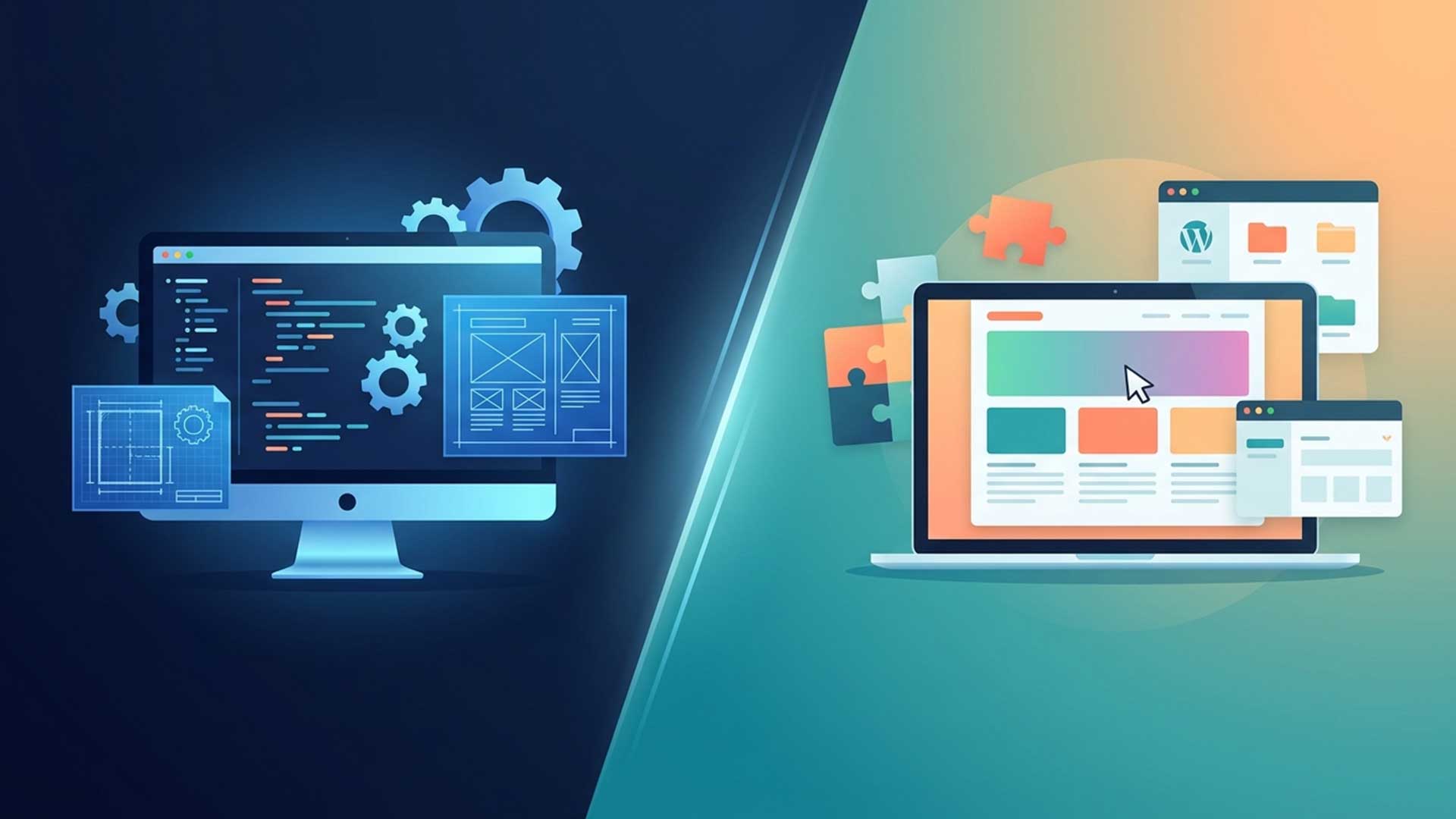
Choose custom development when workflows, integrations, scale, or product behaviour require tailored engineering. Choose WordPress for content-led websites that benefit from its mature publishing ecosystem. Choose Webflow for design-led marketing sites where a visual editing workflow and structured CMS meet the requirements. The right choice depends on operational fit, not platform popularity.
When custom development is the better fit
Custom development is appropriate when the website behaves more like a product, must integrate deeply with business systems, supports complex permissions or workflows, or needs an architecture that a standard CMS would constrain.
It provides control, but that control comes with greater responsibility for product decisions, engineering, testing, hosting, documentation, and ongoing maintenance.
When WordPress is a practical choice
WordPress can suit content-led corporate, editorial, healthcare, and local-business websites where familiar publishing workflows and a mature ecosystem matter. A custom theme and disciplined plugin strategy help avoid the fragility associated with heavily assembled template builds.
Teams should still plan security, updates, backups, performance, accessibility, and editorial governance rather than treating the platform as maintenance-free.
When Webflow suits the operating model
Webflow is often useful for design-led marketing websites where a visual editing workflow, reusable components, interactions, and structured collections cover the publishing requirement.
Before choosing it, confirm CMS limits, localisation needs, integration complexity, editor roles, portability expectations, and the team's preferred deployment and governance model.
Use a decision framework, not a platform preference
Start with user journeys, content volume, editorial ownership, integrations, performance expectations, compliance needs, expected change, internal skills, and the cost of ongoing operation.
- What must the website do beyond publishing pages?
- Who will update it and how frequently?
- Which systems must exchange data with it?
- What would make migration difficult in two or three years?
- Who will own maintenance, security, and quality after launch?